
Highlights
- Healthy urban trees cool neighborhoods, improve air quality, and help manage stormwater.
- Routine inspections and selective pruning can preserve mature trees while reducing preventable hazards.
- Protecting roots, choosing suitable species, and maintaining existing canopy support long-term urban resilience.
- Residents, property managers, and city leaders all have roles in keeping urban forests healthy.
City trees do far more than soften the appearance of streets and buildings. Their canopies shade sidewalks, roots manage rainwater, and branches provide habitat amid pavement. Yet urban trees must contend with compacted soil, limited growing space, construction, drought, and damage from vehicles or storms. Without care, established trees can decline before communities recognize what they stand to lose.
Maintaining the urban forest is therefore an ongoing investment in public health, neighborhood comfort, and resilient infrastructure. Thoughtful tree trimming, appropriate watering, and timely assessments help preserve the benefits that take decades to develop. Property owners can help by recognizing warning signs and seeking guidance early. ArborCraft Tree Service helps Phoenix-area residents and property managers make informed decisions about caring for the trees around their buildings and shared spaces.
The Benefits of Maintaining Urban Trees
Cooling Streets and Buildings
Concrete and asphalt absorb heat, making built-up neighborhoods uncomfortable during hot weather. Tree canopies intercept sunlight before it reaches pavement, parked vehicles, and exterior walls. Trees also release moisture through their leaves, which can cool nearby air. The Environmental Protection Agency explains that shade and evapotranspiration work together to reduce urban heat.
Shade matters especially around bus stops, playgrounds, and walking routes. Trees positioned near buildings may also reduce demand for air conditioning. Maintaining a broad, healthy canopy helps communities retain these advantages rather than waiting years for replacement saplings to grow. In Phoenix, preserving suitable mature trees can be particularly meaningful during extended periods of intense summer heat.
Filtering Air and Storing Carbon
Leaves capture some airborne particles, while trees absorb certain gaseous pollutants. These functions do not eliminate traffic emissions or replace pollution controls, but they add a useful environmental benefit to urban green space. Healthy foliage helps trees continue performing these functions.
According to American Forests, urban forests capture and store nearly 20% of the carbon captured and stored by all U.S. forests, equivalent to roughly 2% of overall U.S. carbon emissions. The distinction matters: urban trees make a meaningful contribution, but they do not offset one-fifth of the nation’s total emissions. Caring for existing trees protects stored carbon and supports continued growth. Avoiding unnecessary removal also preserves shade and habitat that newly planted trees cannot immediately replace.
Managing Rainfall and Protecting Soil
During a storm, branches and leaves intercept rain before it strikes hard surfaces. Roots absorb water, and soils around trees can allow some rainfall to soak into the ground. Together, these processes can slow runoff entering streets and drainage systems. Benefits depend on soil, tree health, rainfall, and surrounding pavement.
Maintenance helps keep these natural systems functioning. Protecting root zones from repeated heavy equipment traffic can limit compaction, while mulch can moderate soil temperature and retain moisture when applied correctly. Property owners should keep mulch away from the trunk rather than piling it against the bark. Where trees grow beside sidewalks or utilities, planning can reduce conflicts without sacrificing healthy canopy unnecessarily.
Supporting Wildlife and Community Well-Being
Urban trees create nesting, shelter, and feeding opportunities for birds, pollinators, and other wildlife. A mixture of suitable tree species and ages can provide more varied habitat than a landscape dominated by a single species. Keeping mature trees preserves features that take time to replace.
Green streets and shaded parks also make outdoor activity more appealing. Residents may be more willing to walk, gather, or spend time outside when public spaces are comfortable and inviting. These benefits are not distributed evenly: neighborhoods with limited tree cover often have fewer shaded routes and gathering places. Maintaining trees in underserved areas, alongside thoughtful new planting, can help cities protect existing green space while expanding access to it.
A Practical Approach to Tree Care
Identifying Problems Before They Escalate
Tree care starts with observation, not indiscriminate cutting. Dead branches, newly exposed roots, fungal growth near the base, or a sudden change in canopy density may warrant professional assessment. A leaning trunk is not automatically dangerous, but a new lean or visible soil movement can indicate an urgent problem. After storms, inspect from a safe distance and avoid damaged limbs.
A qualified arborist can evaluate structure, growing conditions, and potential targets such as homes, sidewalks, or parked cars. The appropriate response might be monitoring, improving soil conditions, selective pruning, or removal when a tree presents an unacceptable risk. Early assessment gives owners more options and helps prevent avoidable damage to otherwise viable trees.
Pruning With Long-Term Health in Mind
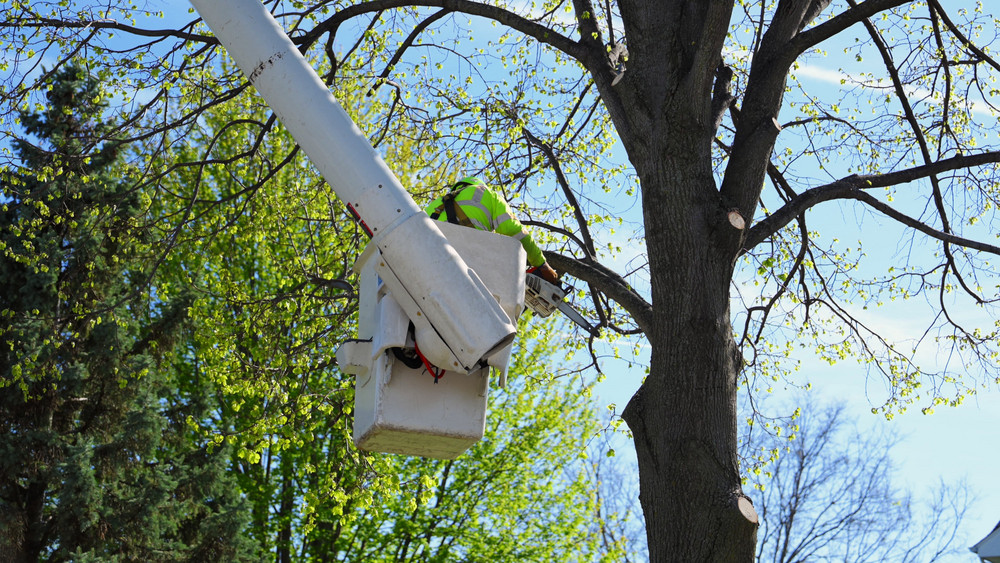
Purposeful pruning removes dead or damaged growth, addresses certain structural concerns, and maintains appropriate clearance. However, excessive cutting can reduce the leaf area a tree needs to produce energy. Poorly placed cuts may also create wounds that are difficult for the tree to compartmentalize. Tree trimming should respond to the species, its condition, and a clearly defined objective, not an arbitrary desire for a smaller canopy.
For desert trees, timing and technique can be especially important. Removing too much foliage may expose previously shaded bark to intense sunlight. Routine tree trimming is therefore most useful when guided by an assessment of the individual tree rather than a blanket schedule. Avoid topping, which removes substantial portions of the crown and can encourage weakly attached regrowth. Where branches approach electrical lines, contact the utility instead of attempting the work yourself.
Protecting Roots and Planning for Growth
Trees need adequate space above and below ground. Construction trenches, grade changes, and repeated parking over root zones can interfere with water uptake and destabilize established trees. Before a project begins, identify trees worth preserving and establish protective boundaries around their roots. A professional can advise on the likely extent of the root zone and appropriate precautions.
New planting deserves similar attention. Select species suited to the climate and available space, then consider mature height, canopy spread, irrigation needs, and proximity to structures. Water young trees according to their establishment needs rather than assuming a standard schedule works everywhere. Success comes from matching trees to sites and caring for them.
Healthy Cities Depend on Healthy Trees
Maintaining trees protects benefits that communities cannot replace overnight. Regular inspection, careful pruning, root protection, and informed planting decisions help urban forests remain valuable as cities grow and temperatures rise. For Phoenix-area homeowners and property managers, tree health assessments, pruning, removal, and preventative maintenance can address local conditions. Contact ArborCraft Tree Service today to discuss your property’s trees and request an estimate for appropriate care.
Frequently Asked Questions
How often should trees be professionally pruned?
The interval for tree trimming depends on species, age, condition, and location. An arborist can recommend an appropriate schedule after evaluating growth and structural concerns rather than prescribing the same interval for every tree.
When is tree removal necessary?
Removal may be appropriate for a dead tree, severe structural damage, or an unacceptable risk that cannot be managed effectively. A professional assessment can help determine whether preservation or removal makes sense.
What services does ArborCraft Tree Service provide?
The company serves the Phoenix metropolitan area with pruning, tree health assessments, removal, stump grinding, and preventative maintenance for residential and commercial properties.